The Future of Professional Growth for School Staff: Balancing Time, Rejuvenation, and Teacher Agency

3 min read
Since commencing in January, my focus has been on a significant redesign of our approach to Professional Learning (PL). This work is not happening in a vacuum. It is being shaped and validated by a robust collection of listening posts, including our LEAD survey insights, direct feedback from Member Schools, the observations of our own team and industry partners. We are also grounding our strategy in the latest educational research, particularly recent analyses of the Organisation for Economic Co-operation and Development (OECD) Teaching and Learning International Survey (TALIS) data.
Our findings have led us to a new framework built on three essential pillars: solving the challenge of time poverty, shifting from a deficit model to one of rejuvenation, and increasing exposure to sector expertise.
Addressing the Reality of Time Poverty
The data confirms a reality that every educator feels: Australian teachers are among the most time-poor in the world. When we look at the barriers to effective professional development, it is rarely a lack of will that stops progress. It is almost always a lack of way. The OECD’s TALIS is the world’s largest international survey that captures the ‘voice of teachers’ by gathering data on their working conditions, professional development, and the learning environments in schools across the globe. The TALIS research highlights that workload remains the single greatest hurdle to meaningful growth.
To address this, our new PL strategy stretches far beyond the traditional training room. We are focused on developing learning modalities that are responsive to the realistic lifestyles of our Members. By ensuring that learning can happen in different places and at different times, we remove the structural barriers that often turn professional development into a source of stress rather than a source of support.
Shifting toward Professional Rejuvenation
A critical shift in our mindset involves how we define the purpose of professional learning. For too long, the industry has viewed PL through a ‘deficit model,’ where training is used as a remedial tool to ‘fix’ perceived gaps. This approach is not only demotivating but also fails to sustain a workforce facing intense pressure.
We are moving toward a model of ‘professional rejuvenation.’ In this view, learning is a vehicle for growth and energy. By carefully designing our learning themes and subthemes, we ensure that we are not simply reacting to the latest ‘problem’ of the week. Instead, we are providing a clear map that allows our Members to focus their efforts on long-term professional health and high-quality practice.
Elevating Expert Led Training
A central feature of our new strategy is the ‘Expert-Led’ pillar. This commitment ensures that our Members have access to the highest quality insights and evidence-based practices, from facilitators who understand the challenges they face within their education context.
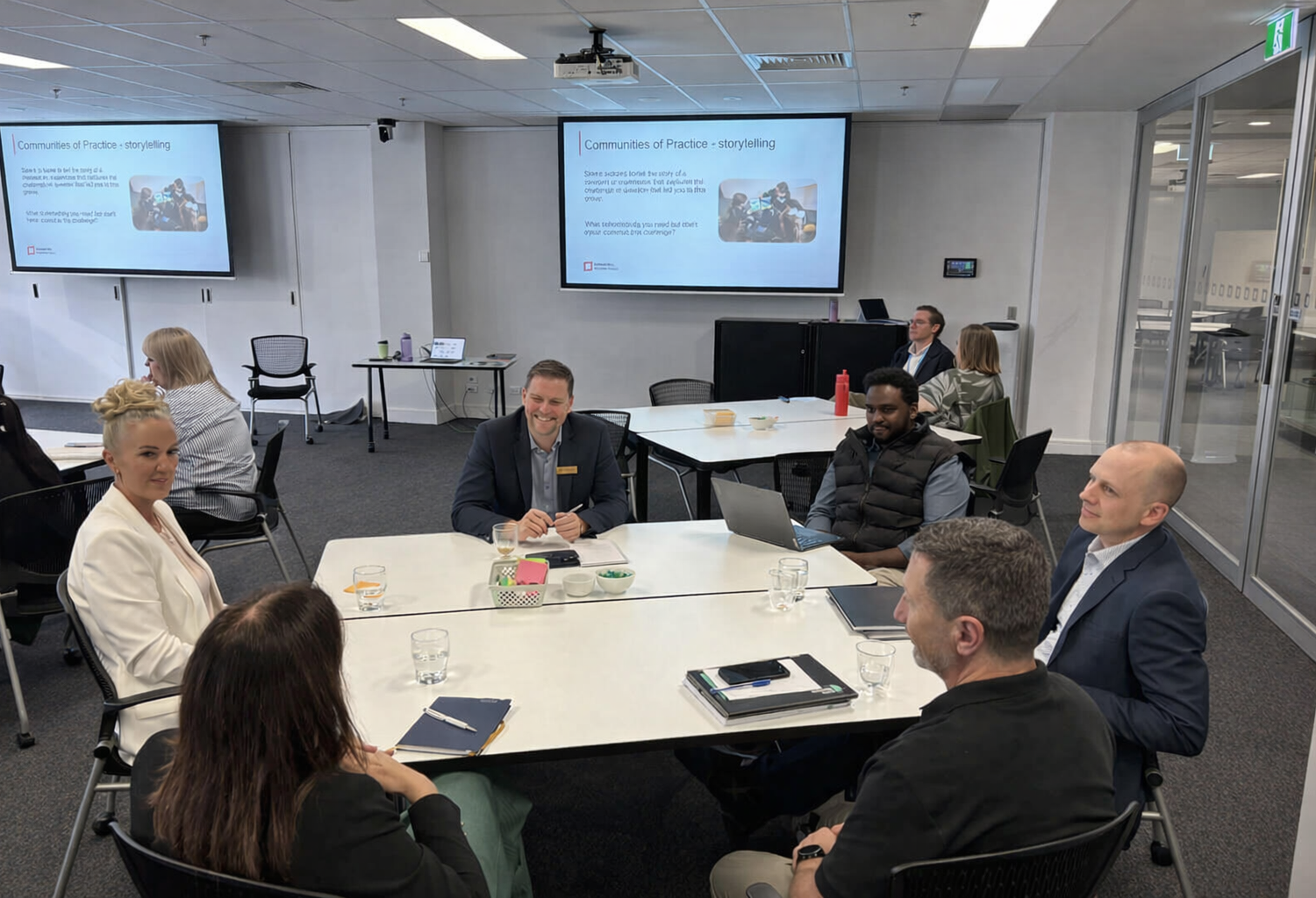
Research is helping to evolve how we conceptualise what the concept of expert-led includes. It has helped to reaffirm the value of our professional networks, whilst highlighting the need to encourage deeper peer level interactions to drive learning outcomes, and less ‘sage on the stage’. While we provide curated expertise, we also recognise that profound expertise exists within our own teaching community. By facilitating networks that allow for peer-to-peer leadership, we encourage teacher agency and avoid the sense of alienation that often comes from purely top-down instruction. These spaces allow participants to demonstrate their own professional mastery, ensuring our PL is both informed by global experts and deeply rooted in local classroom reality.
A Sustainable Path Forward
A holistic strategic revaluation, and an almost ‘back to basics’ approach on planning, is already beginning to bear fruit. These three pillars (flexible time, professional rejuvenation, and teacher agency) reaffirm that whilst the journey ahead is still vast, we are headed in the right direction – building a model of professional learning that is both research-backed and human-centric.
Related Articles
Sarah Dunn, ISV's School Services Advisor / 11 March 2026
Beyond the school office: Risk and compliance in action
2 min read
Risk and compliance in Independent schools now drive governance, safety and trust, shifting from policy checklists to proactive management.
Fiona Williams, Principal at Casey Grammar / 16 March 2026
Disconnecting to Reconnect
2 min read
How Casey Grammar’s Principal made a deliberate decision to reclaim school time as a space free from digital distraction.